Voice, Speech and Swallowing Therapy
Voice, Speech and Swallowing Therapy
Although speaking and swallowing can sometimes feel automatic, producing vocal sound, speaking and articulation, and swallowing require coordinated, smooth muscle action in the face, jaw, tongue, throat, and neck.
When muscle tension, injury, overuse, trauma, surgery, or neurological conditions affect or impair these systems and their functions, difficulties with voice, speech, and swallowing may present as:
Hoarseness, a strained or loss of voice (dysphonia)
Vocal fatigue
Difficulty swallowing (dysphagia), coughing or choking while eating
Sensation of tightness or of having a lump in the throat (globus sensation)
Reduced vocal range or control
Slurred speech or speech which requires more effort
Jaw or tongue tension when speaking
Forward head posture or chronic neck discomfort.
Massage therapy can be a valuable tool for easing these symptoms by addressing the muscles and other soft tissues involved in speech and swallowing.
Treatment is also effective when delivered in collaboration with speech-language pathologists (SLPs), dentists, neurologists, singing instructors, and voice therapists, creating a comprehensive support network.
Voice, Speech, and Swallowing Therapy: What to Expect:
The first session is an Initial Consultation and Treatment and lasts approximately 90 minutes. During this appointment, your RMT will review your medical history and perform a functional assessment of the neck, jaw, and tongue to identify your individual needs and determine the most appropriate treatment approach.
Subsequent treatment sessions, which may be 60 or 90 minutes in length depending on your needs and treatment plan, will also include a functional assessment to monitor progress and guide ongoing care.
Therapeutic massage for voice, speech, and swallowing may often include:
The anterior neck muscles: This helps to decrease tension around the larynx (voice box) and hyoid bone.
Intraoral (inside of mouth) work to the floor of the mouth and base of the tongue. This helps improve tongue elevation and swallowing coordination. Intraoral therapy may also help relieve jaw tension affecting speech articulation.
The posterior neck muscles: Treatment to cervical (neck) and suboccipital muscles assists with postural and breath support.
Laryngeal massage to help reduce strain and to ease phonation (voice production).
As noted, massage therapy often complements the care provided by speech-language pathologists (SLP), singing teachers, voice therapists, dentists, ear, nose and throat physicians (ENT), and neurologists, contributing to a collaborative, team-based approach to patient care.
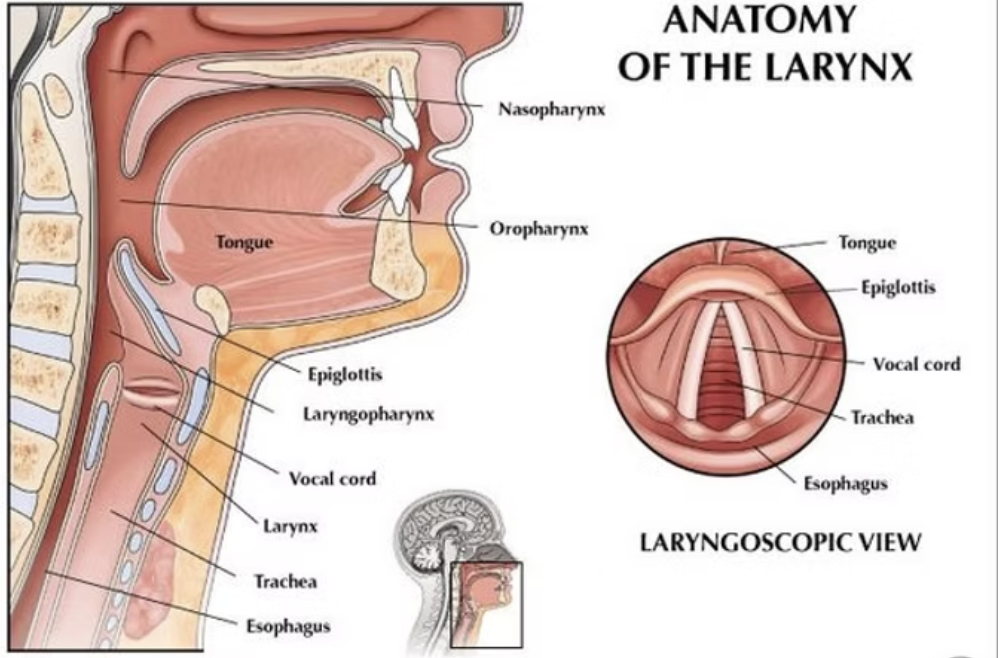
To better understand the areas involved in treatment, please refer to the diagram below, which outlines the anatomy of the head, face, and neck.